
If you live anywhere around Buffalo, New York you’ve probably seen the photos by now.
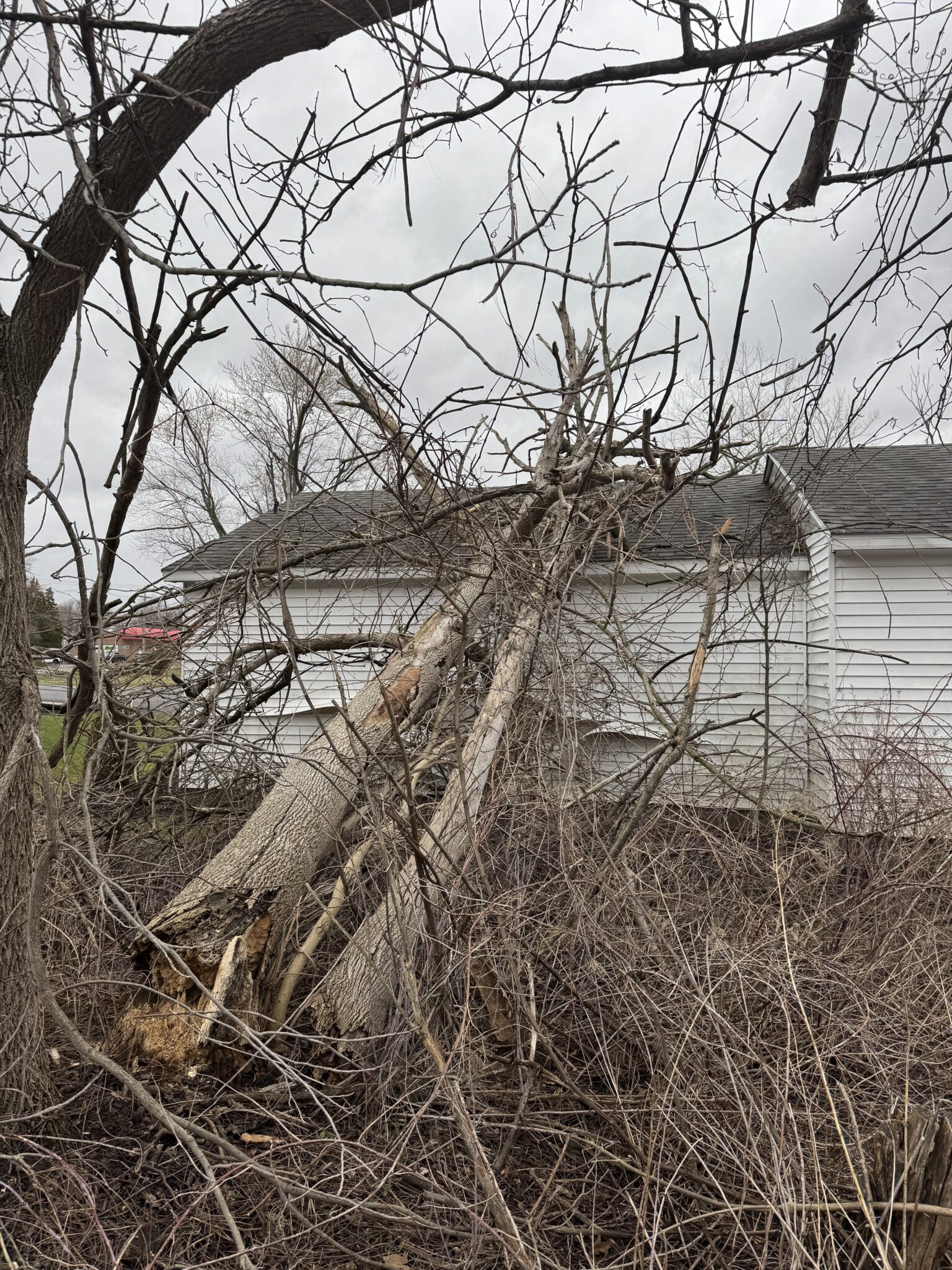
A windstorm rolls through. Maybe some heavy wet snow. Then the next morning someone posts a picture of a tree smashed into a garage or laying across a driveway.
And more often than not… it’s an ash tree.
The surprising thing for a lot of homeowners is this:
Ash trees are still falling years after they originally died.
Most of this damage traces back to the invasive insect called the Emerald Ash Borer.
Even though the main infestation wave hit Western New York years ago, the aftermath is still playing out in neighborhoods today.
Why Dead Ash Trees Are Still Falling in Western New York
When Emerald Ash Borer spread through Western New York, it killed millions of ash trees across the region.
At the time many homeowners didn’t remove them immediately because:
- the tree still looked mostly intact
- it wasn’t dropping branches yet
- or it just didn’t seem urgent
But here’s the part many people don’t realize.
Dead ash trees can stand for years before they fail.
During that time the wood slowly becomes brittle and weak. Internally the structure starts breaking down even if it still looks like a normal tree from a distance.
Eventually something pushes it over the edge:
- strong wind
- heavy wet snow
- saturated soil
- freeze/thaw cycles
And then suddenly the tree that stood dead for years comes down overnight.
Why Ash Trees Become So Dangerous After They Die
Once an ash tree dies, the wood dries out and becomes extremely brittle.
This leads to failures like:
- large limbs snapping unexpectedly
- trunks splitting in storms
- entire trees uprooting
Sometimes there are warning signs. Other times the failure happens pretty quick.
We’ve seen a number of cases around suburbs like
Tonawanda, New York and
Amherst, New York where trees stood dead for several years before finally collapsing during a storm.
And when they fall… they can do serious damage.
Signs an Ash Tree Near Your House May Be Dangerous
If you have an ash tree in your yard or near your property line, here are a few things to look for.
Bark Falling Off
Large sections of bark peeling away is a very common symptom of Emerald Ash Borer damage.
Once this starts happening the tree is often well past the point of recovery.
No Leaves in Summer
If it’s mid summer and the ash tree is mostly bare while other trees are fully leafed out, the tree is likely dead.
Dead ash trees near homes usually shouldn’t be left standing long term.
Vertical Cracks in the Trunk
These cracks appear as the wood begins drying out and losing strength.
Sometimes they’re subtle, but they can be a sign that the structure of the tree is starting to fail.
Mushrooms Growing at the Base
Fungi at the base of the tree can indicate internal decay and root deterioration.
When that happens the tree can become unstable, especially during storms.
Heavy Woodpecker Activity
Woodpeckers often feed on Emerald Ash Borer larvae.
If you notice a lot of woodpecker damage high on an ash tree, it can mean the infestation was severe.
Why This Is Still a Major Issue in Buffalo
Even though the initial Emerald Ash Borer outbreak happened years ago, the effects are still being felt throughout
Buffalo, New York and surrounding communities.
There are still thousands of dead ash trees standing in yards, parks, and wooded areas.
Over time those trees weaken more and more until eventually something causes them to fail.
It might be next winter.
Or the next big windstorm.
Or maybe tomorrow.
Trees don’t always give much warning when they finally go.
When It Might Be Time to Have a Tree Checked
If you have a dead ash tree within striking distance of:
- your house
- a garage
- a driveway
- power lines
it may be worth having it looked at by a professional arborist.
Sometimes the tree can remain standing safely for a while. Other times removal is the better option.
Final Thoughts
Dead ash trees remain one of the most common tree hazards across Western New York.
Because they often stand for years after dying, it’s easy to forget about them… until something happens.
If you’re unsure about a tree on your property, having it looked at before the next storm season can sometimes prevent a much bigger problem later on.
If you’d like more information about tree health inspections or ash tree removal in the Buffalo area, you can visit