
Buffalo, New York has a long and rich history, and some of the city’s oldest living landmarks are not buildings at all—they are trees. Many of the largest and oldest trees in the Buffalo area are found in historic cemeteries where they have quietly grown for well over a century.
These mature trees are more than just shade providers. They are part of the historic landscape, environmental health of the city, and living pieces of Buffalo’s past.
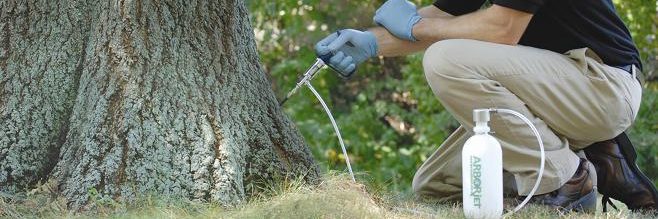
As a Buffalo NY certified arborist, we often evaluate some of the oldest trees in historic cemeteries throughout Western New York.
For cemetery caretakers, trustees, and visitors, preserving these trees is an important responsibility.
Why Cemeteries Often Have the Oldest Trees in Buffalo
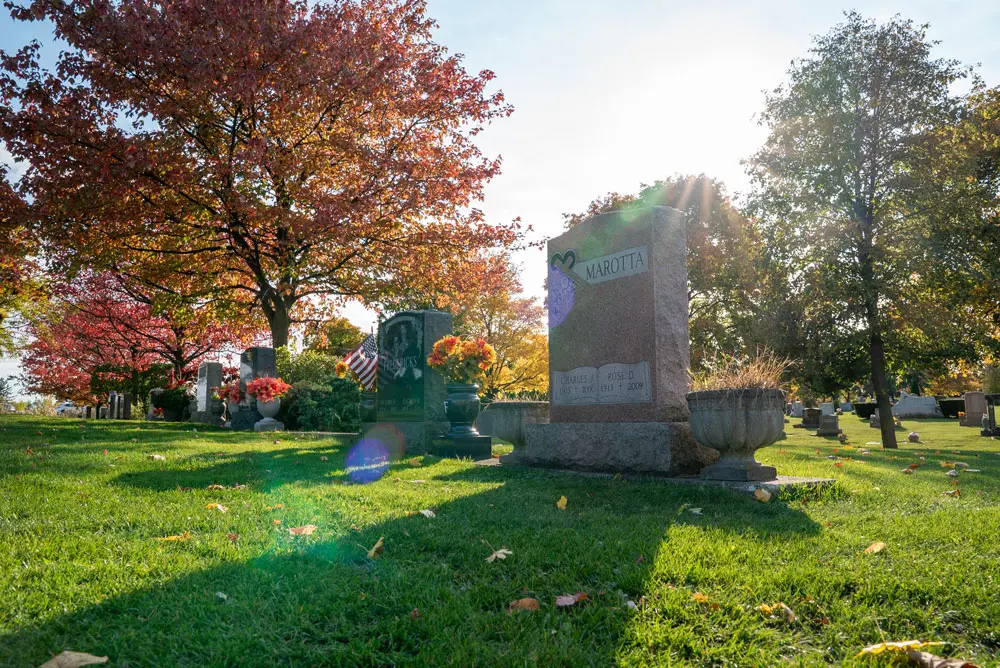
When many cemeteries in Western New York were established in the 1800s, trees were intentionally planted as part of the landscape design. During that time period, rural garden cemeteries were designed to feel like parks, with long walking paths and carefully planted shade trees.
Because cemeteries are protected spaces where development rarely occurs, many of these trees have survived far longer than trees in residential neighborhoods.
It is common to find mature:
• White oak
• Red oak
• Sugar maple
• American beech
• Eastern white pine
Some of these trees may be well over 100 years old and form the historic canopy of Buffalo’s cemetery landscapes.
Forest Lawn Cemetery and Buffalo’s Historic Tree Canopy
One of the most famous examples is Forest Lawn Cemetery in Buffalo, which was established in 1849. The cemetery was designed with a park-like landscape and contains hundreds of large, mature trees that define its character today.
Many of the towering oaks and maples seen throughout the grounds were planted generations ago and now represent some of the most impressive urban trees in Western New York.
These legacy trees help create the peaceful and historic atmosphere that visitors associate with the cemetery.
Why Old Cemetery Trees Need Professional Arborist Care
While mature trees are incredibly valuable, they also require careful management as they age.
Over decades, cemetery trees can develop issues such as:
• Soil compaction from foot traffic and maintenance equipment
• Root collar burial from years of added soil or mulch
• Structural weaknesses like codominant stems or included bark
• Deadwood accumulation in large canopies
• Decline caused by restricted root zones
Without periodic inspection by a certified arborist, these problems can go unnoticed until a tree begins to decline or becomes a safety concern.
Tree Risk and Public Safety
Cemeteries are open public spaces that receive visitors year-round. Mature trees growing near paths, roads, and monuments must be monitored for structural stability.
Professional arborist tree risk assessments help identify potential hazards early and document the structural condition of significant trees. This type of evaluation allows cemetery boards and caretakers to make informed decisions about pruning, preservation, or long-term monitoring.
Regular assessments also help protect the historic tree canopy while maintaining a safe environment for visitors.
Preserving Buffalo’s Living History
Large historic trees play an important role in the character of Buffalo’s cemeteries. Many of these trees were planted when the cemetery first opened and have witnessed generations of local history.
Preservation techniques used by certified arborists can help extend the lifespan of these trees, including:
• Structural pruning to reduce limb failure risk
• Cabling and bracing for mature tree support
• Root collar excavation to restore proper root flare
• Soil aeration and root zone improvement
• Long-term monitoring of legacy trees
These proactive care methods allow mature trees to remain healthy and stable for decades to come.
The Importance of a Cemetery Tree Management Plan
Some cemeteries benefit from creating a tree inventory that documents the location, species, and condition of significant trees on the property.
A professional tree inventory helps identify:
• Historic “legacy trees” worth preserving
• Trees that require structural maintenance
• Declining trees that should be monitored
• Areas where new canopy trees could be planted for future generations
This type of long-term planning helps ensure that the cemetery landscape remains healthy and beautiful far into the future.
Protecting Buffalo’s Historic Trees
Buffalo’s cemeteries are quiet historical landscapes filled with remarkable trees that have stood for generations. These trees provide shade, beauty, wildlife habitat, and an irreplaceable connection to the past.
Proper arboricultural care helps preserve these living landmarks so they can continue to define Buffalo’s historic landscapes for many decades to come.
If you oversee a cemetery or historic property in the Buffalo area and are interested in having your trees evaluated by a certified arborist, professional tree assessments and preservation services can help protect these important natural assets.